
Hey tech enthusiasts and future forward-thinkers,
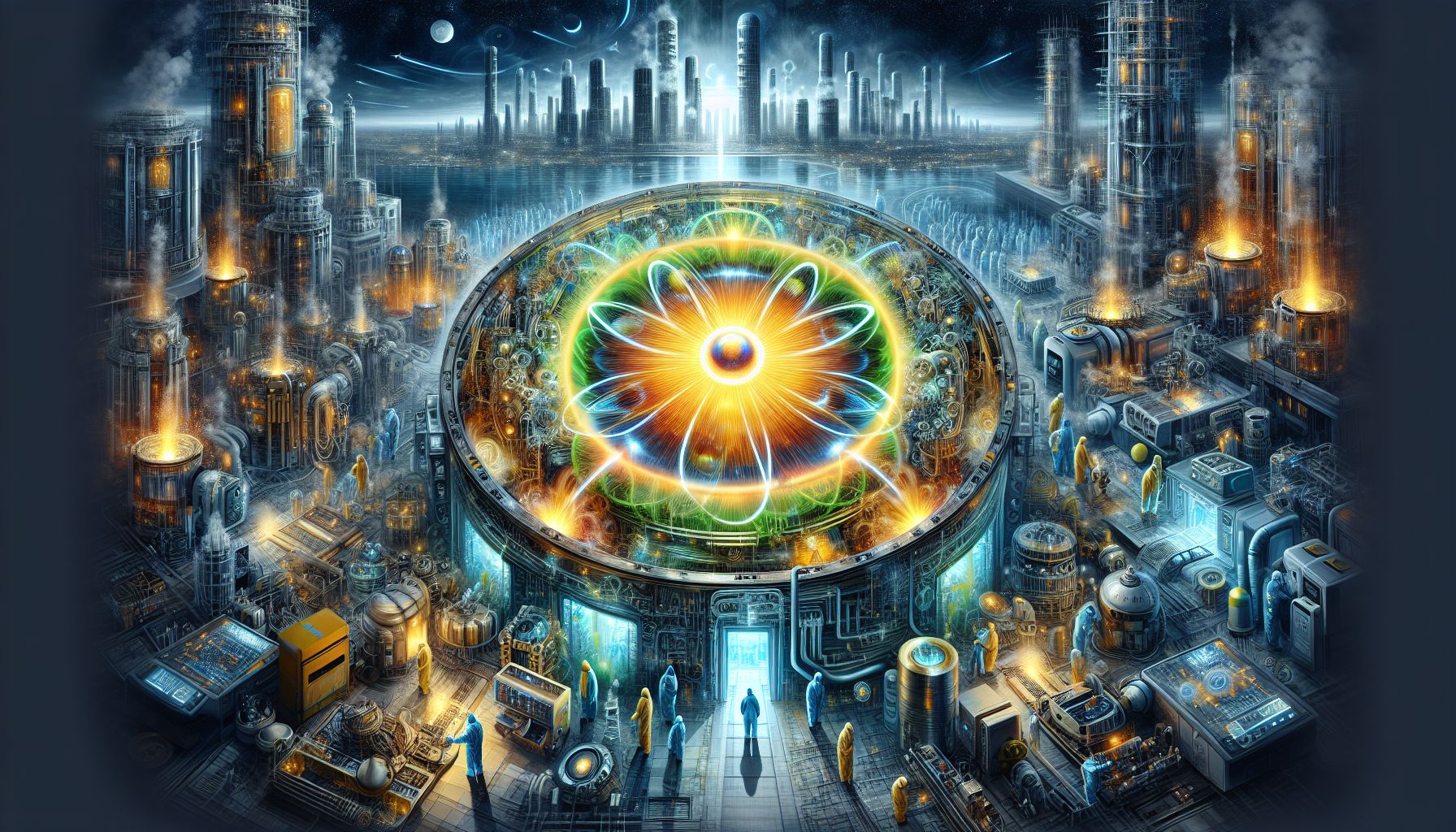
Today, I’m diving into a topic that gets my inner sci-fi nerd absolutely electrified: nuclear fusion! Yeah, you heard me right—the sun-in-your-pocket, infinite-clean-energy kind of stuff. Remember those classic sci-fi flicks where fusion reactors power just about everything from your toaster to your flying car? Well, folks, the actual science is catching up, and honestly? It’s even cooler than the Hollywood blockbusters suggested.
What is Nuclear Fusion, Anyway?
For those who weren’t paying attention in high school physics (don’t worry, I won’t tell), nuclear fusion is the process of combining light atomic nuclei to form a heavier nucleus. In simpler terms: smash together a couple of hydrogen atoms, and bam! You’ve got a helium atom and a crazy amount of energy released in the form of heat and light. The sun and stars have been pulling off this explosive magic trick for eons, and now, clever humans are trying to replicate it right here on Earth.
Why Should We Care?
Alright, here’s why you should be doing cartwheels over this: nuclear fusion might actually solve some of the world’s biggest energy problems. You know, the kind that keep economists, environmentalists, and anyone with a conscience up at night. Unlike its cousin, nuclear fission (think Chernobyl, but less disastrous if done right), fusion leaves behind no long-lived radioactive waste. Can I get a hallelujah?
Plus, the fuel source for fusion is literally abundant. Imagine fueling your car with ocean water. Well, kind of. The heavy isotopes of hydrogen used in fusion, like deuterium and tritium, can be extracted from seawater or easily bred in reactors from lithium. We’re talking about a virtually limitless energy source that could eclipse our reliance on fossil fuels and cut emissions dramatically.
The Science Fiction is Becoming Science Fact
Okay, maybe I’m getting a bit ahead of myself. If you’re a skeptic, you’ve probably heard fusion hyped as “just a few decades away” for, well, the last several decades. But recent advances have made it a compelling reality worth discussing.
Major Players: The Titans of Fusion
Big brains and deep pockets are in the mix to make fusion happen. We’ve got the International Thermonuclear Experimental Reactor (ITER) in France aiming to be the first reactor to achieve a net positive energy output. In layman’s terms, it should produce more energy than it consumes. If ITER succeeds, it’s like saying, “Eureka! Fusion works!”
But wait, there’s more! Private companies are throwing their hats into the ring too. They’re smaller, scrappier, and super ambitious. Think Helion Energy and Commonwealth Fusion Systems. These startups believe they can achieve sustainable fusion in the next few years. Talk about throwing down the gauntlet!
Technologies and Challenges Ahead
Now it’s not all sunbeams and rainbows here. Creating the perfect conditions for nuclear fusion on Earth is a Herculean feat. We’re talking incredibly high temperatures, around 150 million °C (ten times hotter than the sun’s core!) and the challenge of containing this reaction with magnetic fields in a tokamak. These tasks aren’t small potatoes, let me tell you!
Then there’s keeping the reaction stable long enough to actually harness the energy. It’s like trying to contain a tantrum-throwing toddler with undulating magnetic field lines. If toddlers were as hot as a nuclear core.
What’s Next?
Where do we go from here? If all goes to plan, we could see fusion plants complement traditional energy sources by the middle of the century, maybe sooner if we really hustle.
Economic Implications
Fusion could be a colossal game-changer for global economies, slicing energy costs and reigniting industrial booms in countries that previously lagged due to lack of access to cheap power. Developing nations could bypass the fossil-fuel era entirely, leaping straight into a green future. Pretty wild, right?
Societal Impact and Sustainability
Once we’ve cracked this code (fingers crossed), fusion can shift the balance in how we consume and perceive energy. Environmentalists, rejoice! We could slow down climate change, allow for more sustainable development, and help conserve precious natural ecosystems.
Conclusion: Let’s Keep the Momentum Going
Alright, let’s wrap this up. While nuclear fusion might sound like the golden goose of energy solutions, the road to making it mainstream is full of hurdles. That being said, the pace of development is picking up steam, combining audacious scientific endeavor with smart investments.
So what’s the takeaway? Keep your antennas up, folks. The fusion era might just ignite change that completely skips the industrial revolution playbook and jumps right into the age of clean energy.
Until next time, keep dreaming big and questioning everything. Let’s make sure our future is as bright as the fusion fires we’re itching to harness.
Stay curious,
[Your Name]