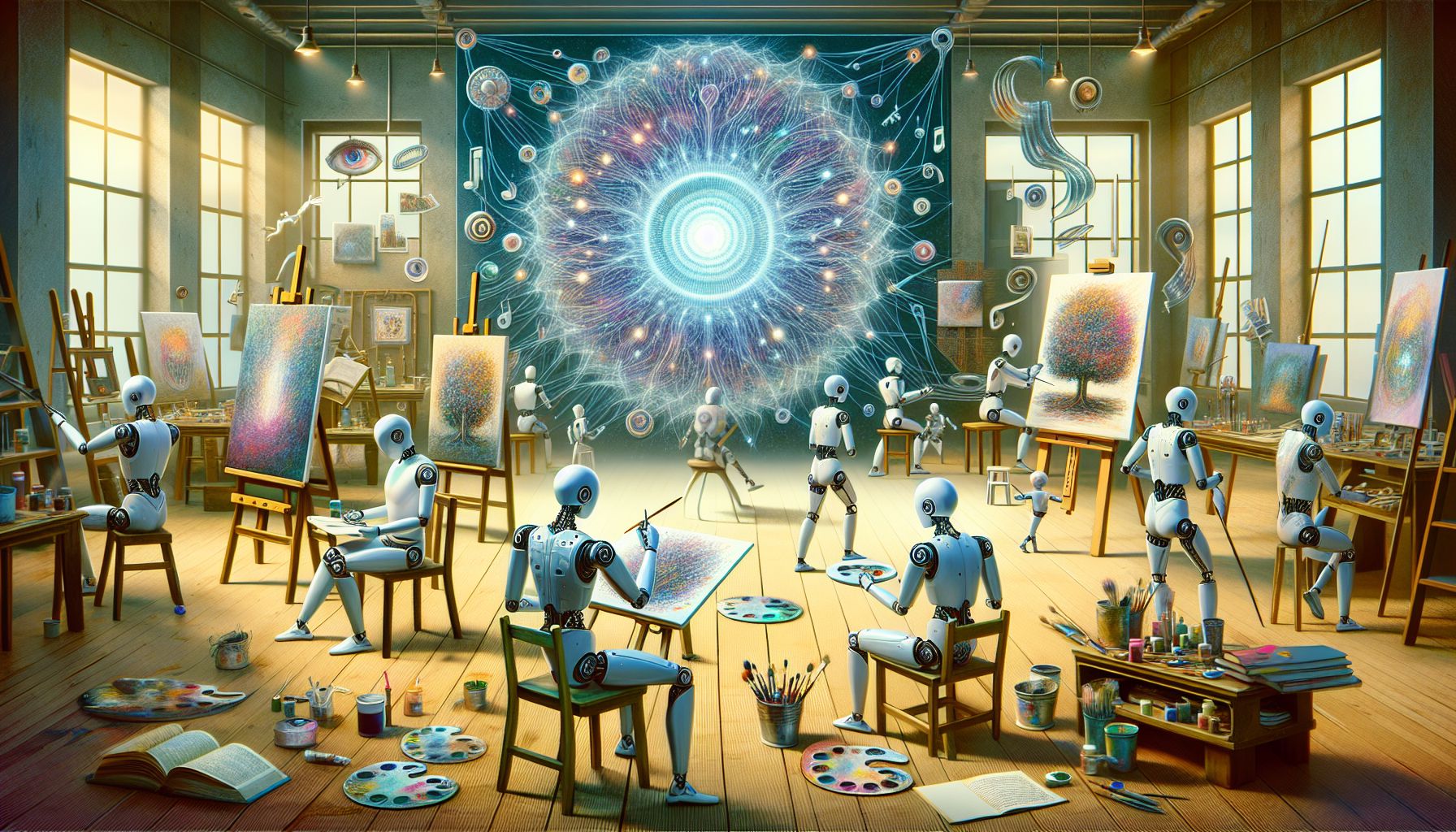

Hey tech enthusiasts, future artists, and digital dreamers! Today, we’re stepping into territory that might make some of you raise an eyebrow, but that’s what makes it all the more exciting, right? We’re diving into the daring world of generative AI in the creative arts. Now, before you start imagining a dystopian future where robots are creating our next museum exhibitions, let’s hit the brakes and talk about what’s actually happening, and what could happen, as AI keeps pushing into creative territory.
The AI Explosion in Creativity
So, what’s the deal with generative AI in the arts anyway? Basically, these are algorithms and models designed to generate content. Think of AI that composes music, writes stories, or even paints. No, it didn’t guzzle down Vincent van Gogh’s spirit juice, but it sure feels like it sometimes.
Take OpenAI’s DALL-E and ChatGPT, for instance. Not too long ago, they were the stuff of tech folklore. Now, they’re changing how we create. As an artist dabbling in oil paints and Photoshop alike, I can tell you: these tools don’t replace us, they challenge us. They present a fresh canvas of possibilities by generating new ideas, boosting creativity, and allowing for wild experimentation.
The Artistic Renaissance of Bits and Bytes
Music: Jamming with Algorithms
Remember the days when mastering one instrument felt like climbing Mount Everest? Today, AI’s coming along with a helicopter. AI algorithms can generate a symphony from a few simple inputs, personalize playlists, and even compose original tracks. Platforms like AIVA and Amper Music are leading the charge, helping composers generate complex musical compositions. But don’t worry, human touch, the soul of music creation, isn’t going anywhere. AI’s like a spell book for musicians, opening doors and presenting wild notes our human minds might overlook.
Visual Arts: From Code to Canvas
Visual arts are where generative AI feels like pure sorcery. Algorithms like those from DeepArt or Google’s DeepDream have given us AI that can transform a photograph into a painting echoing any master. It’s pure alchemist’s magic, turning pixels into Picasso. Some artists now ‘collaborate’ with AI to create stunning visuals that merge conventional art styles with modern digital flavors.
But what’s wild is AI’s ability to surprise us. Just like a mischievous apprentice, AI’s interpretations aren’t always what you expect, but that’s the beauty. An artist friend of mine who shall remain nameless (let’s call him “John”) fed his portfolio into an AI program. The result was a series of artworks that looked nothing like his previous work, yet somehow captured his essence on a different level. More tools, more colors for the brushstrokes.
Literature: The New Ghostwriters?
Okay, now this is where some purists might take a step back. An AI that writes novels? Scenes from “Terminator” are flashing, aren’t they? But hold your laser blasters, this isn’t tech run amok. We’re talking about tools like OpenAI’s GPT-3, which can assist writers by generating text based on prompts. They can whip up dialogue, suggest plot twists, or even dream up a poem in the style of Shakespeare. Authors like me have started using AI during writer’s block. Imagine that: stuck on a plot? Enter AI muse.
Challenges: Sifting Through the Silicon
With any revolution, the road isn’t always paved with gold. We’re faced with creatively stimulating, yet ethically tricky challenges.
Originality and Authenticity
There’s this ongoing debate: Is something generated by AI truly art? If originality is in human experience, can AI truly capture that? The truth is, AI doesn’t have experiences, emotions, or that spark of creativity we claim as our own. It mimics, it learns, and sometimes, what it produces might just seem derivative.
Ownership and Copyright
Ah, the prickly pear of intellectual property. If an AI model creates a gorgeous piece of art, who owns it? Is it the one who designed the model, the one who provided the data set, or the algorithm itself? Companies and legal systems are still hashing this one out, creating a bit of a wild west scenario for AI-generated works.
The Future: AI as a Creative Partner
Looking forward, let’s not pit humans against AI. Instead, see this union as the ultimate creative partnership. So what if an AI helps write a novel’s setting or compose a haunting tune? It’s wielded by human hands, for human audiences, expanding our creative repertoire. Imagine where we could be in the next decade: immersive art installations, AI-designed operas, hybrid exhibitions where algorithms paint beside humans.
Maybe we’ll look back on this era and laugh at our worries, as AI keeps refining creative processes, amplifying human potential rather than replacing it.
The Final Strokes
So here’s my take: AI isn’t here to steal the creative passion that fuels the arts. It’s here to act as a co-creator, a muse, a creative sparring partner if you will. It’s helping us, creatives of all sorts, venture into uncharted territories and explore the unknown.
So grab your virtual paintbrush, your AI companion, and create something amazing. Because this, my friends, is a collaborative future to get excited about. What do you think, revolutionary artists of tomorrow?