
The Plateau Nobody Wanted to Talk About
Walk into any upscale restaurant kitchen right now and you’ll still find fermented hot sauce tucked somewhere in the mise en place. It earned that real estate fair and square over the past decade, carving out legitimacy from a place of genuine merit. But something shifted in 2025, and if you’ve been paying attention to the numbers, the shift is undeniable. The broader hot sauce market keeps growing, with projections moving from 3.77 billion dollars in retail value to 4.2 billion by 2027 according to Grand View Research Hot Sauce Market Report, but artisan fermented offerings hit their first year-over-year sales plateau in six years. That’s not a slowdown. That’s a signal.
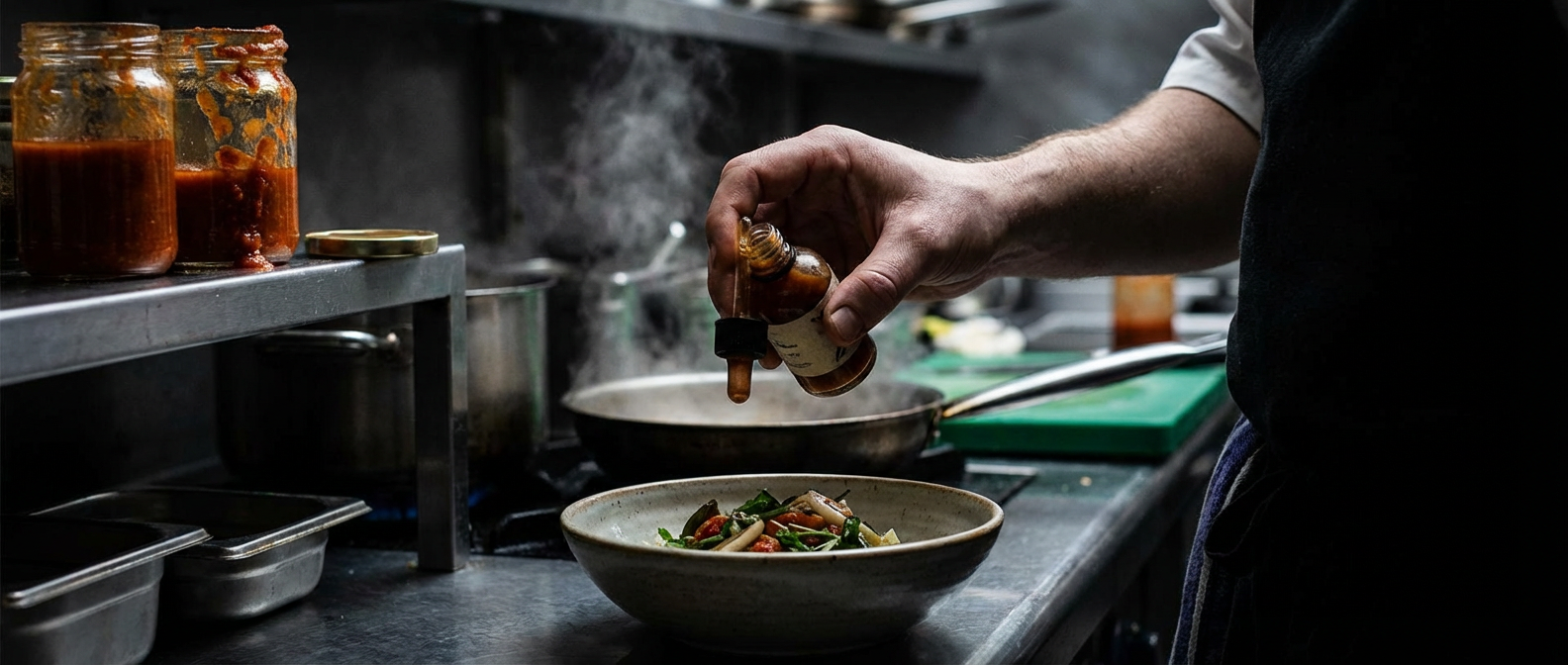
I’ve spent enough time in professional kitchens to recognize when a trend has transformed into shorthand. Fermented hot sauce stopped being a technique and started becoming a crutch. Chefs were reaching for it the way previous generations reached for truffle oil—as a flavor amplifier that could mask fundamental seasoning problems. Chef Kwame Onwuachi didn’t mince words in his 2025 cookbook foreword, explicitly cautioning against treating generic fermented hot sauce as a substitute for proper seasoning architecture. He wasn’t being cruel. He was being precise. When you have to lean on one ingredient to make your food sing, you’ve already lost the plot.
The Nigerian Spice Blend Taking Over
Yaji entered the conversation so quietly that most people didn’t notice it arriving. This Hausa-Nigerian spice blend, traditionally used as a dry rub and seasoning base, appeared on 14 percent more American restaurant menus in 2025 than the year prior. That’s a meaningful climb for an ingredient that wasn’t part of the mainstream culinary lexicon five years ago. The difference between yaji and fermented hot sauce isn’t subtle if you understand flavor architecture. Yaji builds complexity through its foundation—ground cayenne, ginger, garlic, onion, and salt creating a multidimensional base rather than a single heat vector.
What makes yaji especially interesting from a kitchen perspective is its versatility as both a dry application and a wet ingredient. You can dust it across proteins for textural contrast and layered seasoning. You can bloom it in fat to build sauce foundations. You can mix it into marinades where it works with acid rather than fighting it. The shift toward yaji reflects chefs rediscovering the value of seasoning intentionality—choosing ingredients because they serve a specific structural purpose in the dish, not because they’re trending or convenient.
Sichuan Heat and Italian Paste Are the Real Winners
Fly By Jing’s Sichuan chili crisp moved 30 million dollars in retail revenue during 2024 and followed that momentum by launching a restaurant wholesale program in early 2025. The numbers speak for themselves, but the interesting part isn’t the commercial success—it’s what the product represents. This isn’t fermented heat delivered through time and microbial action. It’s chili oil built through intentional roasting and infusion, designed to deliver numbing Sichuan peppercorn pungency alongside bright chili flavor and textural crunch. Fly By Jing Restaurant Wholesale Program now supplies over 800 US restaurants with this product, which tells you something about how thoroughly chefs have absorbed it into their technical toolkit.
At the same time, Calabrian chili paste from Southern Italy is experiencing genuine growth. Import volume increased by 19 percent between 2024 and 2025, according to USDA trade data. Calabrian chilies bring a specific profile that fermented hot sauces don’t replicate—they’re fruity, they’re oily, they have textural presence, and they come from a centuries-old tradition of preservation through salting and packing. When a chef reaches for Calabrian paste, they’re accessing a specific place, a specific technique, and a specific flavor that can’t be substituted without changing the dish fundamentally. That specificity matters. It means the chef is making a choice rather than defaulting to a category.
The Deeper Shift: From Trend to Intentionality
The real story here isn’t that fermented hot sauce is bad. It isn’t. A well-made fermented hot sauce with proper aging, careful ingredient selection, and disciplined production has genuine culinary value. The story is that chefs are moving away from category thinking toward ingredient thinking. They’re asking what specific heat profile, texture, and flavor complexity their dish actually needs rather than asking what’s currently fashionable or easy to reach for.
This reflects a maturing of restaurant culture in the United States. Ten years ago, fermented hot sauce represented authenticity and craft in a market dominated by industrial condiments. That was true and valuable. Now, the market has developed enough sophistication that chefs can choose from global traditions with actual depth—Nigerian seasoning blends rooted in centuries of culinary history, Sichuan numbing heat from a region with sophisticated spice traditions, Italian preservation techniques refined over generations. The conversation has shifted from “should we use fermented hot sauce?” to “which specific heat and flavor profile does this dish require, and where in the world has that been perfected?”
What This Means for the Next Wave
If you’re cooking at home and you’ve stocked your pantry exclusively with fermented hot sauce, this is your signal to expand your thinking. Visit a market that specializes in ingredients from cuisines you don’t cook regularly. Buy small quantities. Taste them without context first, then in simple applications where you can understand their specific flavor signatures. Ask yourself what your dish actually needs—is it bright fruity heat, numbing complexity, textural contrast, umami depth? Match your ingredient choice to that requirement rather than reaching for what’s convenient.
The chefs who will define 2026 and beyond aren’t following fermented hot sauce out the door. They’re the ones who understood what that ingredient taught us about intentionality and craft, then applied those lessons to the full range of global heat and spice traditions. That’s where the real cooking is happening right now. What ingredients have caught your attention lately that you think are being overlooked or misunderstood by the mainstream? I’d genuinely like to know what you’re seeing in your kitchen, your market, or your favorite restaurants.