
The Market Has Spoken, and It’s Speaking Spanish
We are living through the second major wave of tinned fish enthusiasm in a decade, and this time the momentum is not dispersing. Between 2023 and 2025, sales of tinned seafood in the United States jumped 31 percent, a figure that alone signals a genuine behavioral shift rather than a passing trend. But the real story is in the specificity: premium Spanish conservas have grown 47 percent in specialty retail during that same window. This is not accident. This is the market recognizing that certain categories of preserved seafood are genuinely superior to what came before, and Spanish producers—many of them family operations that have been perfecting their craft for more than a century—are finally getting the platform their work has always deserved.
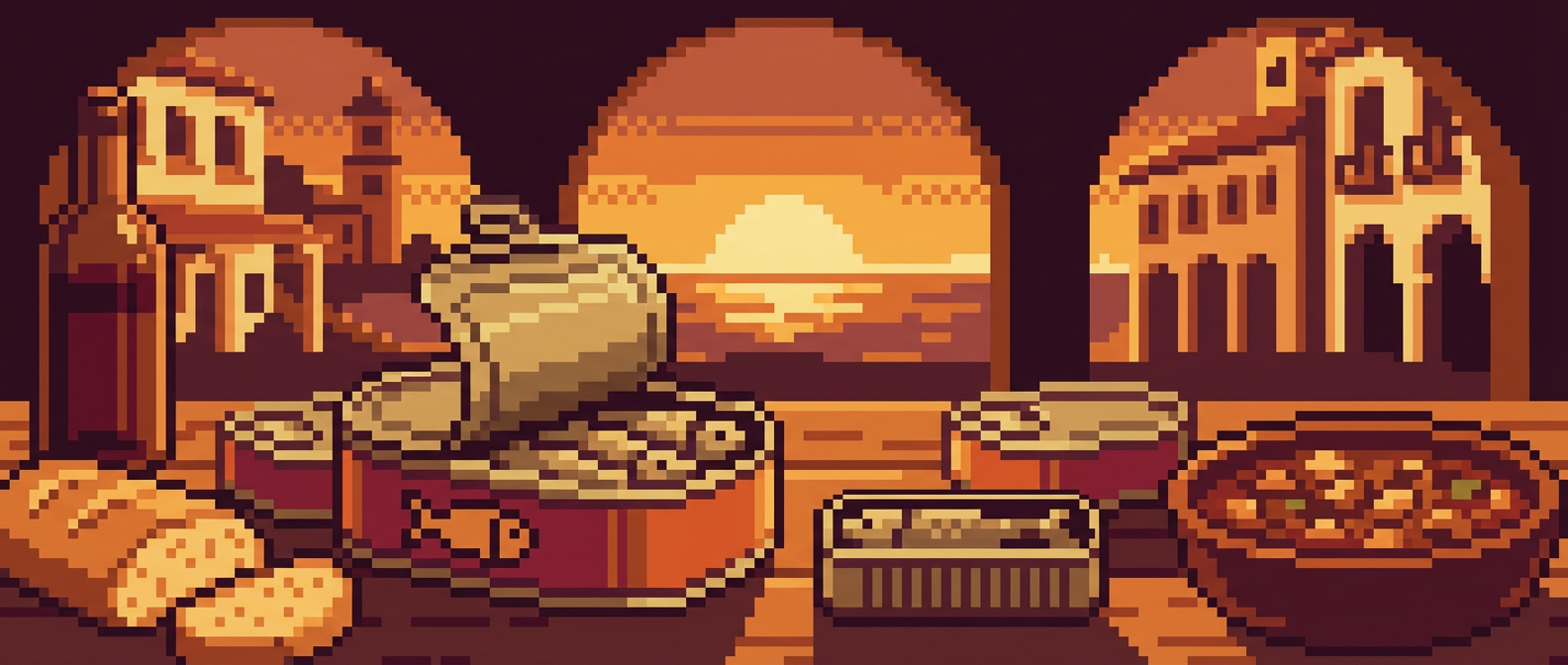
That Spanish conservas are now commanding shelf space and serious attention in American kitchens reflects something deeper than nostalgia or trend-chasing. It reflects the reality that the United States, as a food culture, has grown impatient with mediocrity. We have learned to distinguish between the industrial tinned fish of the 1970s—those pallid, oil-logged products that gave the entire category a bad name—and the hand-packed, carefully sourced conservas that represent a completely different product category. The technical difference is substantial. The sensory difference is undeniable.
Why Spanish Producers Own This Moment
Spain’s coastal regions, particularly Galicia, have maintained an unbroken tradition of seafood preservation that stretches back centuries. This is not a retroactive invention designed to capitalize on millennial food trends. These operations carry centuries of accumulated knowledge about timing, sourcing, and the precise chemistry of preservation. A house like Conservas Albo, founded in 1906 and now seeing a 200 percent surge in exports to the United States following features in major publications and nominations on James Beard Award-winning menus, is a good example of this continuity. These producers know which vessels yield the best flavor at which point in their lifecycle. They understand how pressure, temperature, and timing interact during the canning process. They source from specific fisheries at specific times of year because they know that a morcilla of scallops landed in November tastes categorically different from one landed in April.
The sustainability profile of Spanish hand-packed conservas operations is worth paying attention to. According to the Marine Stewardship Council Sustainable Seafood Report, these traditional operations generate some of the lowest carbon footprints per gram of protein in the entire seafood industry. This matters. As we move further into 2026, consumers who care about environmental impact are discovering that buying Spanish conservas is not a compromise—it is actually one of the most responsible seafood choices available. The hand-packing itself, which sounds labor-intensive and therefore environmentally expensive, actually means minimal processing, minimal transportation of intermediate products, and minimal waste.
Building Dinner Around Spanish Conservas
The mistake most home cooks make when they first encounter Spanish conservas is treating them like ingredients rather than centerpieces. They crack open a tin of Galician percebes or a dose of Cantabrian anchovy and think “these should go on a pizza” or “these would be good in a salad.” This mindset is backwards. These products are complete expressions of flavor. They do not need much. They need the right context.
Start with the simplest framework: a single conserva, excellent bread, and nothing else. This is not deprivation. This is clarity. Open a tin of conservas de pulpo a la gallega, or if you want something lighter, a tin of hand-packed Spanish mussels. Place the contents in a shallow bowl with its own gelée intact. Toast a slice of good sourdough or country bread. Rub it with a cut garlic clove if you want. Finish with fleur de sel and a squeeze of Manzanilla vinegar. This is dinner. It is also the baseline for understanding what you are actually tasting.
From this foundation, you can build outward. A tin of Spanish conservas over warmed white beans becomes a complete protein with real textural depth. The same product scattered across grilled bread with romesco sauce and a single perfectly cooked egg becomes breakfast. Add it to warm lentils with sherry vinegar and you have a salad that holds up for days. These conservas reward simplicity. They do not want to disappear into a crowded dish. They want to be present.
The Infrastructure Is Now in Place
What makes this moment different from previous tinned fish cycles is that the infrastructure supporting Spanish conservas has matured. New York’s first dedicated conservas bar, La Lata, opened in the West Village in October 2025 and earned a Michelin Bib Gourmand within three months. This is not a cute gimmick location. This is validation that conservas culture has grown beyond the enthusiast category. When Michelin recognizes a restaurant built around tinned seafood and minimal preparation, it sends a signal to every other serious establishment in the city. It normalizes the category. It gives permission to other chefs and home cooks to trust what they are experiencing when they open a tin of Spanish seafood.
The gifting market has also shifted substantially. Food52’s Tinned Fish and Conservas Guide listed tinned fish assortments as its most-purchased item in the 2025 holiday season, followed again by strong performance in 2026. The average order value has climbed from $45 in 2023 to $68 currently. This suggests that consumers are not buying single tins of commodity product. They are investing in curated selections of premium Spanish conservas, treating these products as worthy of gift-giving. Five years ago that would have seemed niche to the point of eccentricity.
What This Means for Your Pantry and Your Calendar
If you have been waiting for the right moment to build a serious conservas collection, that moment is now. The selection in American specialty shops has expanded dramatically. The pricing, while still reflecting the genuine labor involved in hand-packing these products, has stabilized. The product knowledge among retailers has improved substantially. You can actually have a conversation with someone who understands the difference between a Galician operation and a Basque one, who can point you toward what is currently in season, who can recommend specific producers based on your preferences.
The seasonal argument for Spanish conservas is straightforward: these products are preserved at their peak, captured at the precise moment when the flavor is greatest and the quality is assured. You are eating something that represents the best that a particular fishery and a particular season produced. That is the opposite of compromise. It is seasonal eating in its most honest form. In January, when you are tired of storage vegetables and frozen proteins, a tin of Spanish seafood connects you directly to the autumn harvest of the Atlantic.
What are you discovering in your own conservas explorations? If you have found producers or preparations that have changed how you think about tinned seafood, I want to hear about them. Real knowledge here is distributed across home cooks and restaurant professionals alike, and the conversation is genuinely open.