
The Restaurant Secret That’s Finally Gone Mainstream
If you’ve spent any real time in a professional kitchen, you’ve seen it: the combi steam oven sitting in the corner, doing the heavy lifting on everything from perfectly cooked fish to vegetables that actually taste like themselves. These machines aren’t new to the restaurant world. They’ve been the backbone of fine dining for decades, quietly delivering results that conventional ovens simply cannot match. What’s changed is that the home cook finally has access to equipment that doesn’t require a commercial-grade electrical setup and doesn’t cost more than a used car.

The numbers confirm what any chef already knows. Countertop combi steam oven sales in the United States increased by 34 percent in 2025, according to the Association of Home Appliance Manufacturers annual report. That’s not a niche market finding. That’s a real shift in how serious home cooks are approaching their craft. This isn’t about owning a status symbol. This is about understanding that certain techniques, certain results, simply require the right tool.
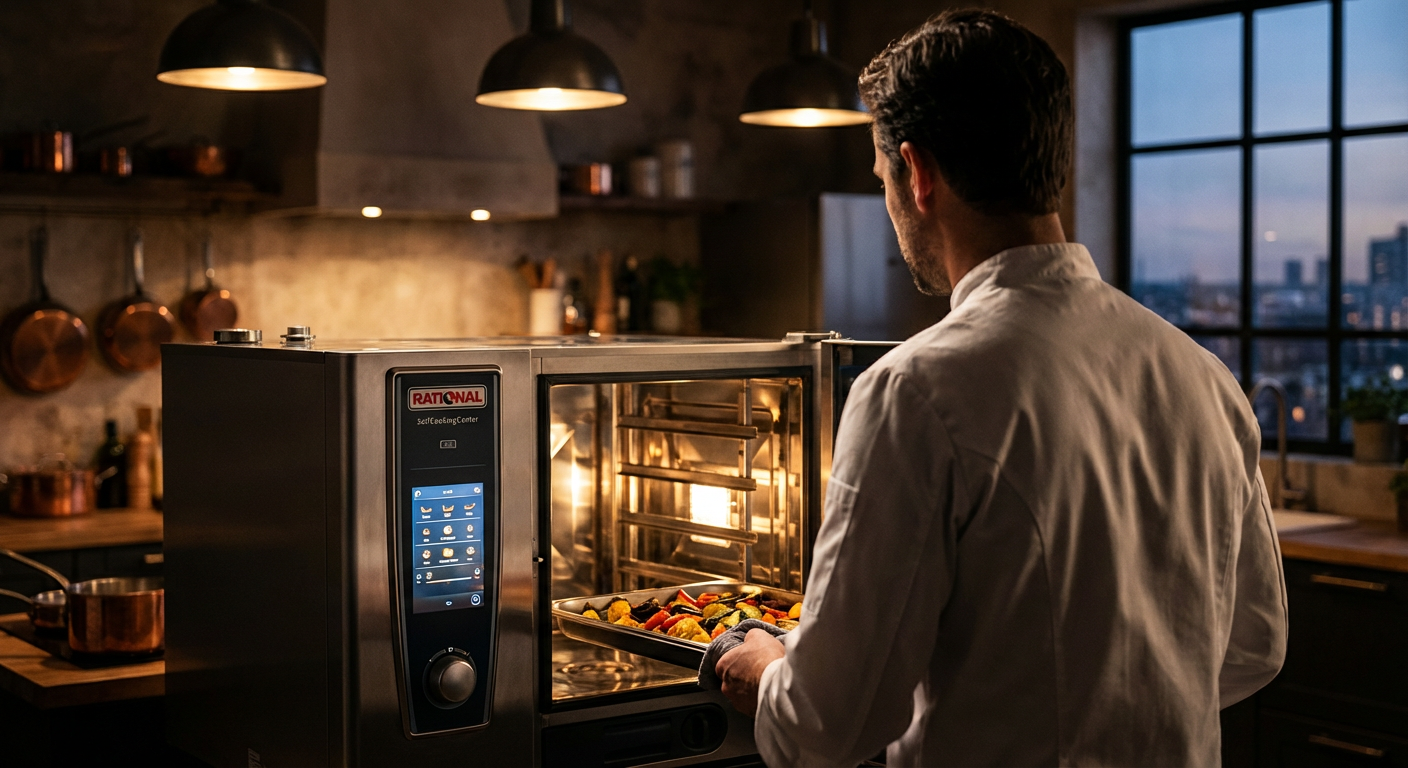
The turning point came when Rational AG, the company that supplies combi ovens to more than half of Michelin-starred restaurants globally, decided the consumer market was ready. Their new Rational AG SelfCookingCenter Overview launched in late 2025 at a $2,400 price point. That matters because it represents professional-level technology at a price that thoughtful home cooks can actually justify.
What You’re Actually Getting: The Science Behind the Results
A combi steam oven combines three cooking methods: dry heat (convection), steam, and a combination of both. That flexibility matters more than most home cooks realize. The oven can maintain precise humidity levels while circulating hot air, which fundamentally changes how food cooks. Proteins don’t dry out because the steam environment prevents surface moisture loss. Vegetables cook evenly because the humid air conducts heat more efficiently and predictably than dry air alone.
The nutrient preservation argument isn’t marketing speak. A 2025 study published in the Journal of Food Science demonstrated that steam-combination cooking methods preserved up to 40 percent more water-soluble vitamins compared to traditional convection methods. That means broccoli actually retains more of its B vitamins. Carrots keep more of their nutritional density. If you’re cooking with the intention of nourishing yourself and your family, this matters.
The consistency piece is what really separates these ovens from what you’ve been working with. Conventional ovens have hot spots. They fluctuate. Combi ovens hold temperature and humidity with precision that sounds obsessive until you’ve actually cooked with one and tasted the difference. A fish fillet at 56 degrees Celsius stays at 56 degrees Celsius. Not 56.5. Not 55.8. That’s where the restaurant advantage lives.
The Equipment Arriving Now: Real Options for Real Kitchens
The equipment landscape in early 2026 looks dramatically different from even two years ago. Wolf and Miele both unveiled 30-inch built-in combi steam units at KBIS 2026 in Las Vegas, signaling a serious commitment to the luxury residential market. These aren’t experimental products. These are components from companies that have spent decades understanding what home cooks actually need. Integration with your existing cabinetry means these are no longer relegated to the countertop as separate appliances.
For those not ready to commit to a built-in installation, the countertop options have matured considerably. America’s Test Kitchen concluded their extensive blind testing of consumer-level combi ovens and named the America’s Test Kitchen Anova Precision Oven 2.0 Review as their top-rated unit after a six-month evaluation period. That kind of rigorous assessment, from an organization known for their uncompromising standards, carries real weight.
The price range now spans from around $1,200 for solid entry-level countertop models to $8,000 and beyond for premium built-in units. That breadth of options means you can make a choice based on your actual cooking habits and kitchen space, not based on some arbitrary price floor.
What Changes When You Have This Tool
Here’s what nobody tells you until you’ve worked with a combi oven: your entire approach to recipe development shifts. You stop accepting the limitations of conventional cooking because you realize they were never inherent to the food itself. That slightly gray chicken breast you’ve been producing? It wasn’t inevitable. It was the limitation of your equipment. That asparagus that comes out mushy? Same thing.
Proteins become dramatically easier to execute correctly. Salmon at 48 degrees Celsius for 18 minutes emerges with the texture of butter because the low temperature and moisture prevent the proteins from contracting violently. Chicken breasts stay juicy because they’re never subjected to the drying effects of dry heat. Root vegetables develop flavor through caramelization while maintaining structural integrity because the steam prevents the exterior from drying out before the interior finishes cooking.
The secondary benefit is efficiency. These ovens cook faster and more predictably than conventional equipment, which means shorter cooking times and more consistent results. Your energy costs don’t spike dramatically. The precision means less waste because fewer dishes emerge underdone or overcooked.
Why This Matters Now, in 2026
Better equipment availability, reasonable pricing, serious manufacturer commitment, and demonstrated nutritional and flavor advantages have all arrived at the same moment. This is when a serious home cook stops asking whether a combi oven is worth it and starts asking which one fits their kitchen and budget.
The restaurant world has known this for years. The professional cooks who care about their craft, who want their food to taste its absolute best, who understand that technique and equipment are inseparable have been using combi ovens as their baseline for decades. What’s changed is that this knowledge has finally reached the broader market in a way that’s economically accessible.
If you’re still cooking with conventional equipment and wondering why your results don’t match what you eat at restaurants, the answer might be simpler than you think. It might not be technique. It might not be ingredients. It might be that you need access to the same tool that professionals have been relying on all along.
Have you spent time with a combi oven yet? I’d genuinely like to hear what’s holding you back or what’s convinced you to take the plunge. The conversation around home cooking equipment is changing, and your perspective matters.