
The Great Reset: When the Dust Settled
The plant-based food revolution hit its peak during the pandemic years, when companies like Beyond Meat and Impossible Foods grabbed headlines and watched their stock prices soar. Their mission was bold: recreate the exact experience of eating meat using only plants. But as the world reopened and people returned to familiar patterns, something unexpected happened. Revenue for these industry stars started dropping from their pandemic highs, showing us a more complicated story about what people actually wanted from plant-based eating.
This moment of recalibration gave us a chance to look at the deeper currents beneath all the hype. The first wave of plant-based innovation had focused heavily on mimicry, creating products that bled like beef and sizzled like sausage. But as the novelty wore off and people developed more sophisticated tastes for plant-based options, a different kind of change started happening. The question was no longer whether plants could perfectly copy meat, but rather how plant foods could show off their own unique potential.
Looking at this from a cultural perspective, something interesting emerges about this transition. Food cultures throughout history have thrived not by copying other traditions completely, but by adapting ingredients and techniques to local tastes, available resources, and cultural values. The early plant-based movement, with its focus on exact replication, was actually an odd moment in culinary history where innovation seemed to move backward toward imitation rather than forward toward new ways of expressing flavor and nutrition.
The Whole Food Renaissance
While ultra-processed plant-based alternatives started hitting a wall in growth, a parallel movement was quietly picking up steam. Whole food plant-based eating began attracting people who wanted the health and environmental benefits of plant-forward diets without all the industrial processing that defined many meat alternatives. This shift reflected growing awareness about the relationship between food processing and nutritional value.
Good Food Institute research suggests this trend is more than just people wanting “clean labels.” It signals a fundamental rethinking of how innovation should happen in food systems. Instead of asking how to make plants taste like animals, culinary professionals began exploring how to make plants taste more intensely like themselves. This approach drew inspiration from traditional cuisines around the world that had developed sophisticated plant-based dishes without ever trying to mimic meat.
The success of this whole food approach revealed something important about food culture and memory. Dishes that celebrated the natural qualities of vegetables, grains, and legumes often proved more satisfying and memorable than those that attempted perfect mimicry. There was something honest about a beautifully prepared bowl of dal that a lab-engineered burger patty, no matter how scientifically impressive, couldn’t quite capture.
Fine Dining Finds Its Voice
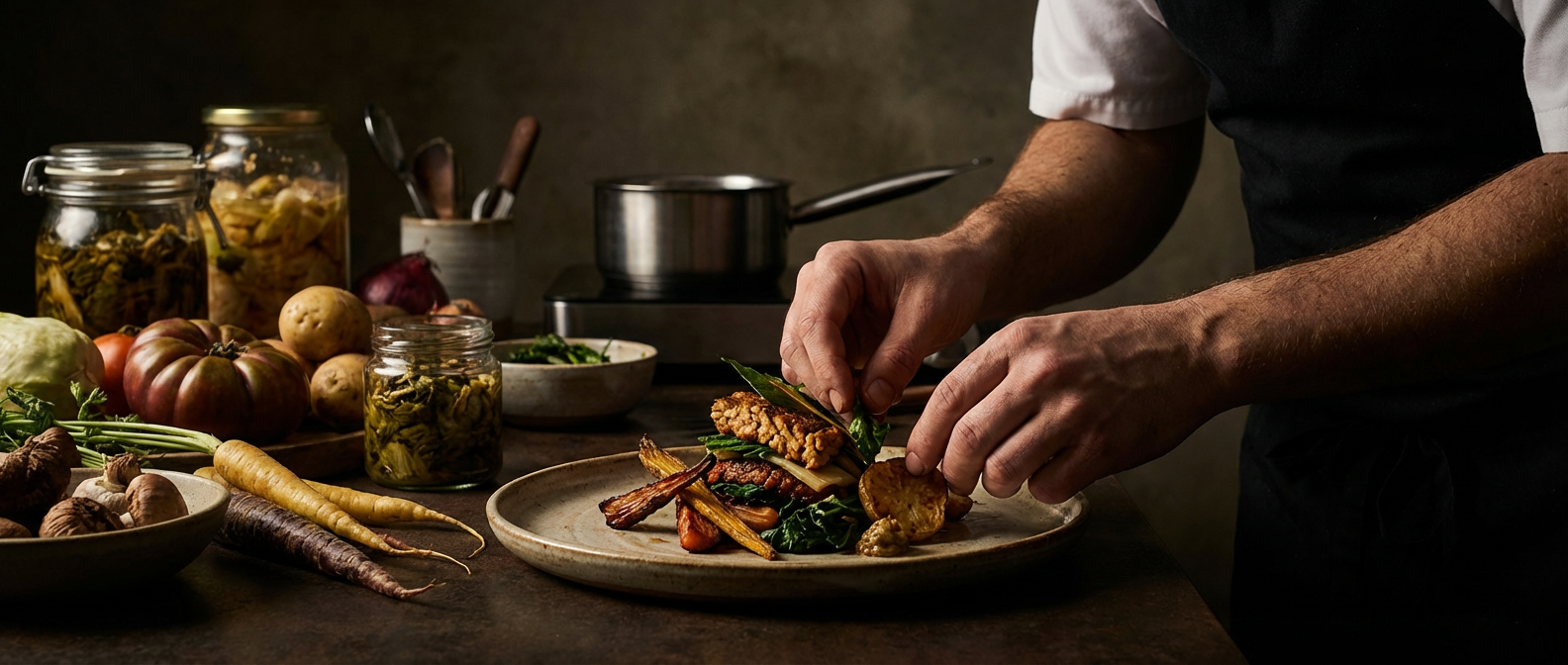
Maybe nowhere was this evolution more obvious than in upscale restaurants, where chefs began replacing processed meat alternatives with ingredients like tempeh, jackfruit, and thoughtfully prepared legumes. These places became laboratories for a new kind of plant-based cuisine, one that drew from global traditions while pushing creative boundaries. The fermented complexity of tempeh, the meaty texture of properly prepared jackfruit, and the protein-rich satisfaction of well-seasoned legumes gave chefs a broader palette than synthetic alternatives.
This shift in fine dining showed a deeper understanding of how luxury food experiences work. Diners at high-end places weren’t looking for convincing replicas of familiar foods, but rather new taste experiences that justified the premium they were paying. A beautifully composed dish with house-made tempeh, indigenous spices, and local vegetables told a story about place, technique, and creativity that no factory-produced meat substitute could match.
The travel patterns of these ingredients also revealed fascinating cultural exchanges. Tempeh, originating from Indonesian fermentation traditions, found new expressions in American kitchens. Jackfruit, long celebrated in South Asian cuisine, began appearing in Mexican-inspired preparations. These adaptations showed how plant-based eating could bridge cultures, introducing diners to flavor profiles and cooking techniques they might never have discovered otherwise.
The Flexitarian Majority Emerges
While media attention focused on the most committed plant-based eaters, a quieter revolution was happening among a much larger group. Flexitarian eating, characterized by reduced but not eliminated meat consumption, had grown to represent 36 percent of American dietary identity, making it the largest single category. This group was less interested in perfect meat substitutes and more focused on delicious plant-forward meals that could stand on their own merits.
The flexitarian approach offered a more practical path to plant-based eating, one that acknowledged the cultural and practical challenges of completely eliminating animal products while still moving toward more sustainable eating patterns. Food Navigator plant-based coverage has highlighted how this demographic drives innovation in ways that pure plant-based consumers alone could not, simply because of their numbers and purchasing power.
This majority also influenced how restaurants and food manufacturers approached plant-based options. Rather than creating separate “vegan” menu sections, places began integrating plant-forward dishes throughout their offerings, normalizing vegetables, grains, and legumes as satisfying meal foundations rather than dietary restrictions. The result was a more inclusive food culture that welcomed experimentation without requiring complete lifestyle changes.
Science Enables Artistry
Behind the scenes, technological advances continued reshaping possibilities for plant-based eating, though often in less visible ways than the headline-grabbing meat substitutes. Precision fermentation began enabling the production of animal-free dairy proteins at costs competitive with traditional dairy, opening new possibilities for plant-based cheese, ice cream, and baked goods that could match the functional properties of their animal-derived counterparts.
Meanwhile, institutional adoption was quietly expanding access to plant-based options in settings where individual consumer choice had less influence. School lunch programs across California and New York began incorporating more plant-based meals, introducing young palates to vegetables and legumes prepared in appealing ways. These programs were long-term investments in shifting food culture, working at the level of habit formation and taste development rather than adult conversion.
The convergence of technological capability with institutional adoption suggested that the next phase of plant-based food evolution would be less dramatic but more durable than the initial wave of innovation. Rather than revolutionary products that captured headlines, the focus shifted toward incremental improvements in taste, nutrition, cost, and accessibility that could support sustained dietary change across diverse populations.
The journey of plant-based cuisine from hype to maturity offers insights into how food cultures adapt and evolve. What began as an attempt to replicate familiar experiences has developed into something more interesting: an exploration of what plant foods can become when freed from the constraint of imitation. This evolution continues in kitchens, laboratories, and dining rooms where curious eaters and creative cooks push the boundaries of what plant-based meals can offer.