
When Food History Gets Lost in Translation
The Korean corn dog craze that blew up social media in 2025, racking up over 800 million TikTok views, shows everything that’s fascinating and maddening about how we consume food culture online. These Instagram-worthy creations, with their golden potato chip crusts and stretchy mozzarella centers, became the poster child for Korean street food innovation. The problem? They’re about as traditionally Korean as General Tso’s chicken is authentically Chinese.
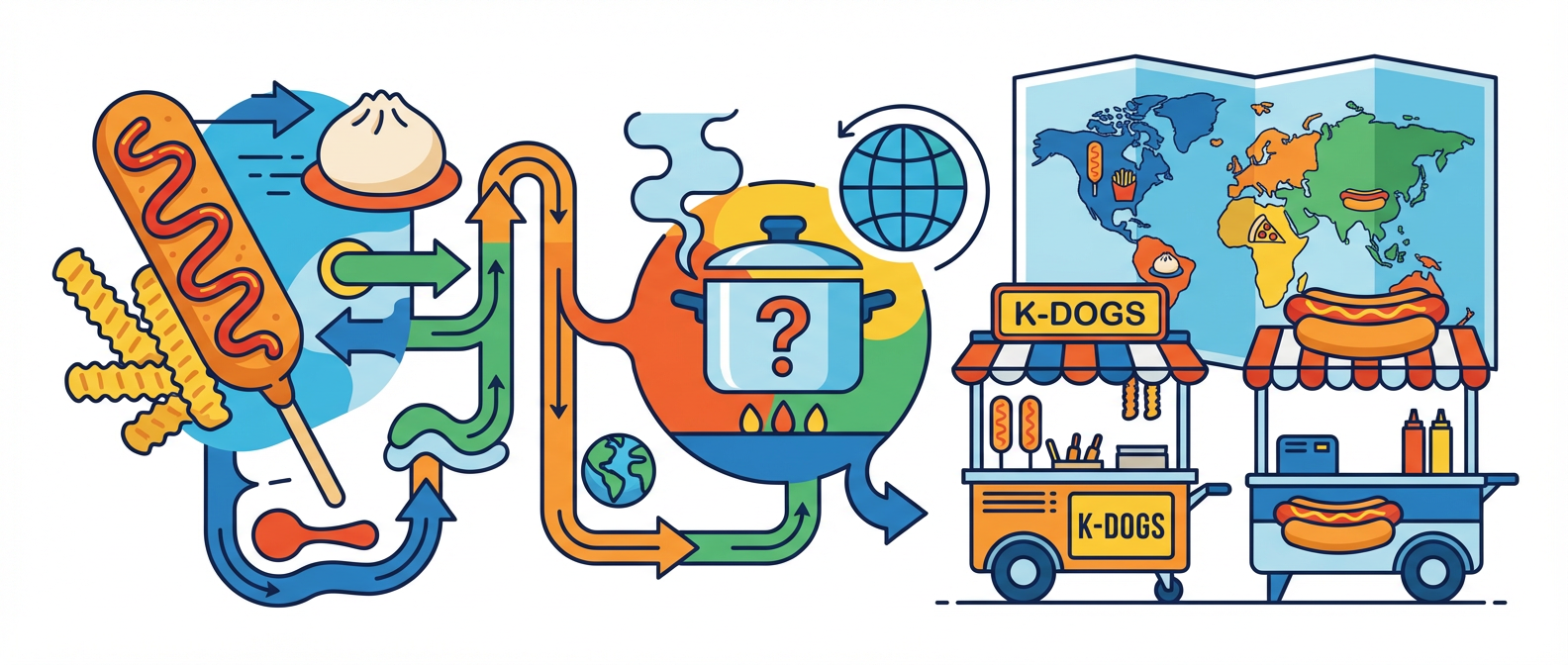
Food historians who’ve dug into the dish’s history found a much more boring origin story. The earliest versions showed up around American military bases in Seoul during the 1960s, where Korean vendors tweaked familiar American carnival food for homesick soldiers. These early corn dogs looked nothing like today’s crazy creations, but they established the basic technique that would eventually turn into the social media sensation we know today.
This gap between perception and reality isn’t just academic nitpicking. It shows how food stories get built, torn down, and rebuilt in our connected world, often leaving the actual cultural context behind. The Korean Cultural Center in Los Angeles felt they had to issue their Korean Cultural Center Food Authenticity Statement in February 2026, politely clarifying that gamja hot dogs represent Korean-American fusion rather than traditional Korean cuisine.
The Taiwan Connection Nobody Talks About
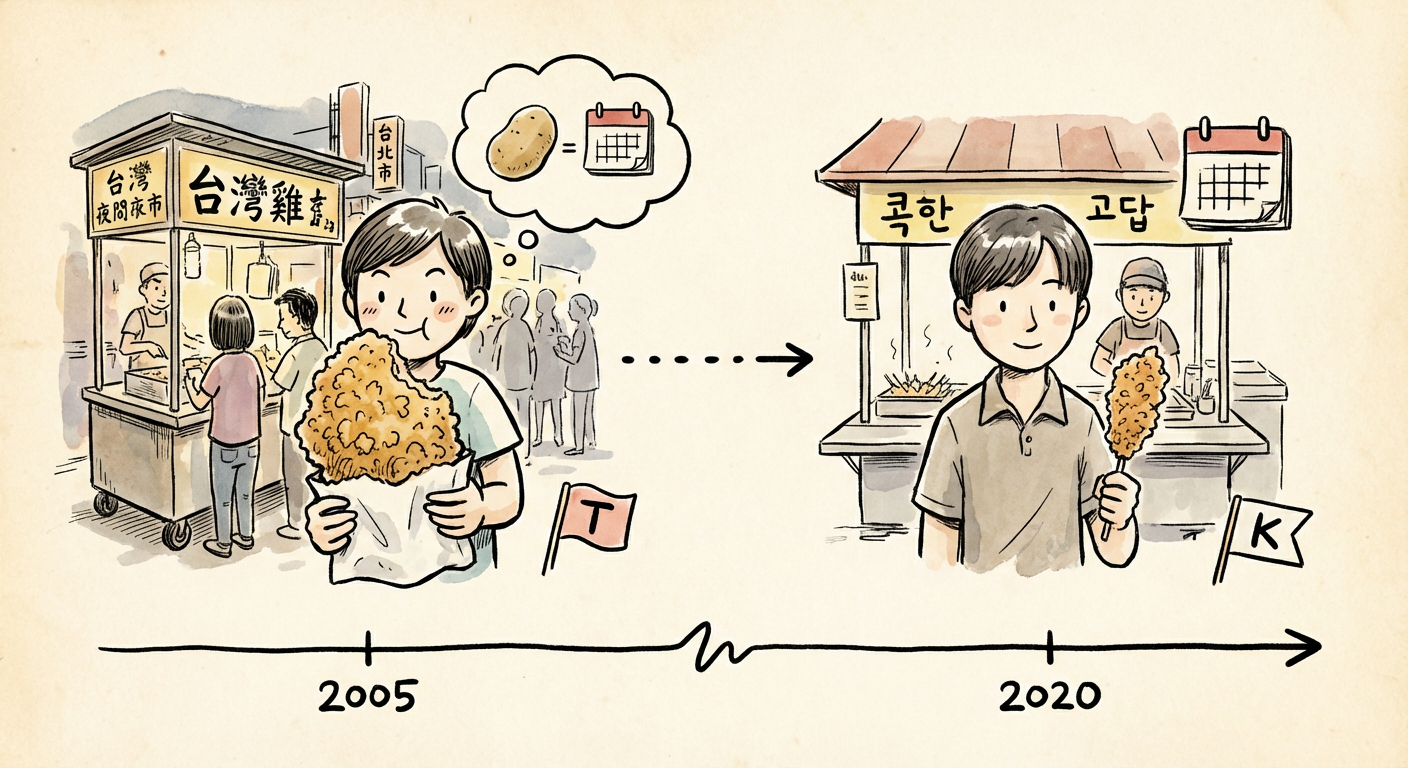
Here’s where things get interesting. Hot Star Large Fried Chicken, a Taiwanese chain that’s been perfecting fried foods since the early 2000s, claims they developed the potato-coated version in 2005. That’s fifteen years before these crispy, cube-covered corn dogs started appearing in Korean night markets, and two decades before they became TikTok royalty.
From a technical standpoint, this timeline makes sense. Taiwan’s street food culture has long embraced the kind of textural complexity that makes these corn dogs so addictive. The technique of coating proteins in diced potatoes before frying creates multiple layers of crunch while the interior stays molten. It’s food science that requires precision timing and temperature control. This kind of technical refinement comes from years of trial and error in commercial kitchens.
The potato coating itself is a masterclass in thermal dynamics. Those small cubes create irregular surfaces that maximize browning through the Maillard reaction, while their varying sizes ensure some pieces crisp up while others provide structural integrity. It’s not the kind of technique that emerges overnight, which supports Taiwan’s claim to the innovation.
The Viral Feedback Loop That Rewrites Culinary History
Google search data tells a revealing story about how digital amplification reshapes food stories. Between January 2025 and March 2026, searches for “Korean corn dog” exploded by 1,340%, while interest in traditional Korean street food stayed essentially flat. This massive attention gap doesn’t just reflect consumer preferences. It actively shapes them, creating a cycle where viral foods overshadow their cultural context.
Dr. Krishnendu Ray’s research at NYU reveals that 73% of viral ethnic food trends on social media are actually fusion dishes created in diaspora communities, not in their countries of origin. His Food Anthropology Research on Viral Trends shows how platforms like TikTok speed up this process, turning complex cultural exchanges into bite-sized content that often strips away nuance.
What makes this particularly interesting is how the algorithm rewards visual drama over cultural accuracy. Korean corn dogs photograph beautifully. The cheese pull is Instagram gold. The colorful coatings create visual variety that traditional street foods, however delicious, often can’t match. The platform doesn’t care about authenticity. It cares about engagement.
Why Technical Innovation Trumps Cultural Ownership
From a purely culinary perspective, the Korean corn dog’s success lies in its technical achievements rather than its cultural authenticity. The current generation of these snacks represents genuine innovation in coating technology, filling combinations, and frying techniques. Korean vendors didn’t just copy existing formats. They pushed the boundaries, experimenting with everything from ramen noodle crusts to combination fillings that balance protein, dairy, and textural elements.
The science behind these creations is legitimately impressive. Managing multiple coating layers while maintaining proper oil temperature requires understanding how different starches behave under heat stress. The successful versions show mastery of moisture control, preventing the dreaded soggy bottom while ensuring the interior reaches the perfect melt point. These aren’t accidental successes. They represent skilled craftsmanship applied to hybrid food concepts.
This technical excellence matters more than cultural purity in the kitchen. A perfectly executed Korean-style corn dog that draws inspiration from American carnival food and Taiwanese coating techniques can absolutely represent legitimate Korean innovation. The problem comes when marketing stories erase the collaborative nature of this evolution, presenting fusion as tradition.
Reclaiming Nuance in Food Stories
The Korean corn dog craze highlights how social media flattens complex culinary stories into easily digestible content. These foods exist in the spaces between cultures, created by immigrants, entrepreneurs, and innovators who drew inspiration from multiple traditions to create something new. That’s not cultural appropriation. It’s how food culture actually evolves.
Understanding these details doesn’t ruin anyone’s enjoyment of crispy, cheesy, perfectly engineered comfort food. It actually makes it better by revealing the layers of innovation, adaptation, and technical mastery that create memorable eating experiences. The Korean vendors who perfected these techniques deserve credit for their contributions without being stuck with claims to historical ownership they never made.
Food culture thrives on this kind of cross-pollination, but it suffers when we oversimplify those exchanges for viral content. The next time you’re scrolling through food videos, think about the invisible network of influences, innovations, and cultural exchanges that created what you’re watching. The real stories are always more interesting than the simplified versions that fit in a 60-second video.