
The Hidden Labor Behind Every Table Experience
After fifteen years moving between James Beard-nominated kitchens and neighborhood joints that barely break even, I can tell you that great service isn’t about the price of your entrée. It’s about systems, training, and respect for the craft. The $200 tasting menu spot with servers who can’t explain the difference between natural wine and orange wine? They’re stealing from you. The $12 burger place where your water glass never goes empty and the cook remembers you’re allergic to onions? That’s value.
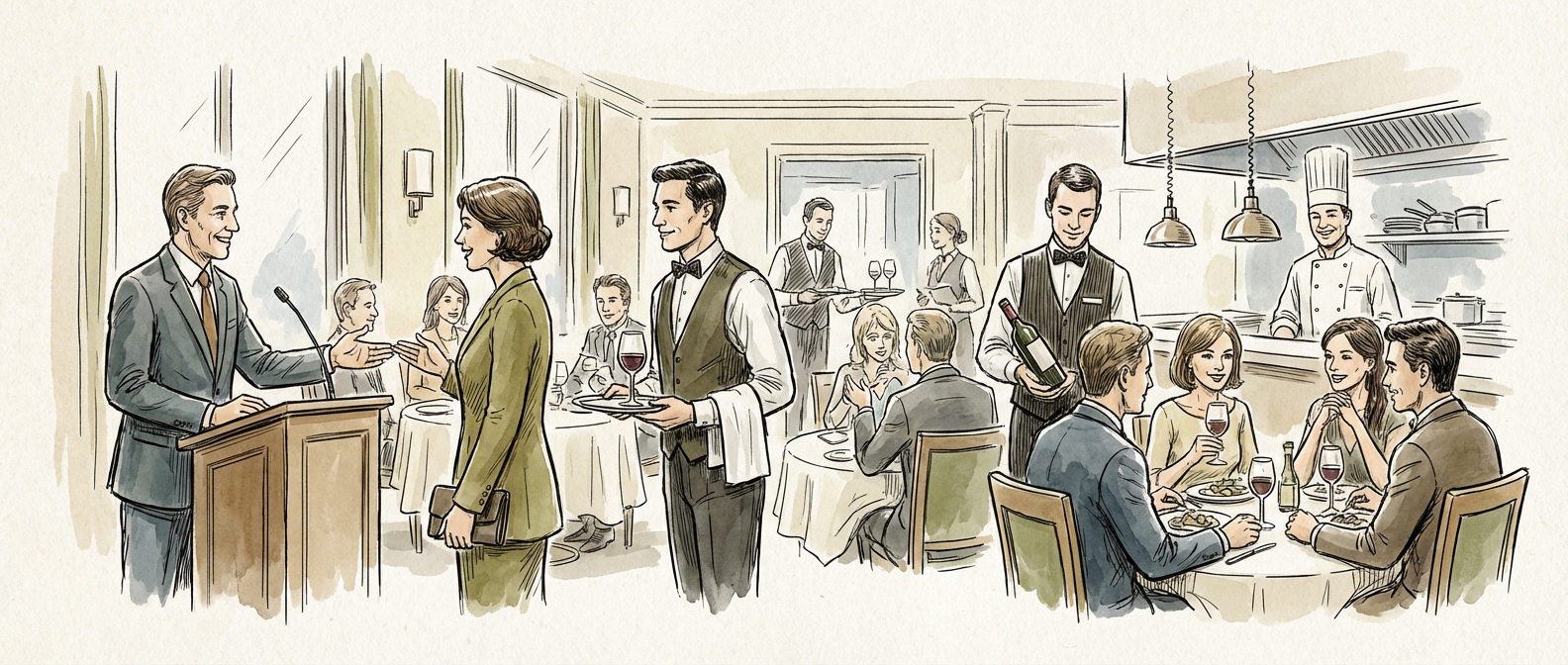
Service quality comes down to three things you can measure: technical skill, consistency, and genuine hospitality. I’ve seen dishwashers promoted to front-of-house positions at high-end restaurants who get these basics better than certified sommeliers at celebrity chef establishments. The difference isn’t their paycheck or fancy uniforms. It’s whether management actually trains people and builds systems that work.
The best service teams I’ve worked with could execute perfect service during a rush because they understood timing, communication, and the mechanical precision required to serve food at the right temperature. These skills don’t cost more to teach at an expensive restaurant than at a cheap one. What changes is whether the owners care enough to teach them.

Reading the Real Markers of Professional Service
Professional service shows itself in details that cost nothing but training time. Watch how your server approaches the table. Do they make eye contact? Can they recite specials without reading from a crumpled piece of paper? When they pour wine, do they know to serve women first, rotate clockwise, and pour exactly four ounces? These aren’t random rules. They’re the foundation of efficient, respectful service that makes every guest feel valued regardless of what they’re spending.
The timing of service tells you everything about kitchen and front-of-house communication. Your appetizer should arrive within twelve minutes of ordering at any competent restaurant. Your entree should follow six to eight minutes after you finish your first course. If these windows stretch way beyond industry standards, the kitchen and service staff aren’t talking to each other. This happens just as often at $40-per-person restaurants as $140-per-person ones.
Temperature control separates amateur operations from professional ones. Hot food should be too hot to touch when it hits your table. Cold preparations should be properly chilled, never room temperature. I’ve sent back lukewarm pasta at Michelin-starred restaurants and received perfectly heated plates at diners. The kitchen’s respect for temperature comes from understanding that their work continues until the last bite, not when the plate leaves the pass.
When Premium Prices Actually Deliver
Higher prices should buy you three specific improvements: ingredient quality, technique complexity, and service refinement. At exceptional fine dining establishments, you’re paying for servers who understand wine pairings, can modify dishes for dietary restrictions without destroying the chef’s vision, and anticipate needs before you voice them. This level of service requires extensive training, ongoing education, and compensation that attracts career professionals rather than people just passing through.
The best expensive restaurants invest in front-of-house education the same way they invest in kitchen equipment. Servers attend weekly wine tastings, study ingredient sourcing, and practice tableside preparation until it becomes second nature. When your server at a $300 tasting menu can explain why the chef chose Miyazaki beef over domestic wagyu, you’re experiencing what your premium actually pays for.
But premium service also means invisible excellence. Your water glass refills itself. Courses arrive precisely timed. The server remembers your preferences from previous visits. These restaurants maintain detailed guest databases, track preferences, and train staff to deliver personalized experiences. This infrastructure costs money to maintain and justifies higher prices when executed properly.
Spotting Overpriced Mediocrity Before You Order
Expensive restaurants that deliver poor value reveal themselves quickly. If the host can’t provide a realistic wait time or seems confused by their own reservation system, management has failed at basic operational planning. If your server can’t answer questions about preparation methods or ingredients, the restaurant is charging premium prices without investing in staff knowledge.
Watch the service flow around other tables. Are servers carrying single plates across the dining room multiple times instead of organizing efficient trips? Do they seem frazzled during moderate dinner service? These are signs of poor training and understaffing. Professional service looks effortless because it’s built on systematic efficiency.
Menu prices that don’t match ingredient quality or preparation complexity indicate markup without value. A $38 chicken breast better involve heritage breed poultry, complex technique, and exceptional sides. If you’re paying fine dining prices for pedestrian execution, you’re subsidizing poor business decisions rather than experiencing culinary excellence.
Finding Exceptional Value at Every Price Point
The restaurants that deliver outstanding value understand that service excellence costs the same whether you’re charging $15 or $150 for dinner. They train staff properly, maintain consistent standards, and respect guests regardless of check size. I’ve experienced flawless service at Vietnamese pho shops where servers remember your spice preference and Lebanese bakeries where the owner greets regulars by name.
Look for restaurants where the staff actually knows their menu. Can they explain cooking methods? Do they understand dietary restrictions? Can they make appropriate wine recommendations within your budget? This knowledge means management invests in staff education and creates an environment where servers take pride in their craft.
The best value comes from establishments that align their pricing with their actual capabilities. A neighborhood Italian restaurant charging $16 for house-made pasta with seasonal vegetables and providing knowledgeable service delivers better value than a trendy spot charging $28 for the same dish with indifferent service. Pay for substance, not perception.
After decades in professional kitchens and countless meals as a paying customer, I’ve learned that exceptional service transcends price points. The principles stay the same whether you’re spending $20 or $200. What changes is the complexity of execution and the depth of knowledge required. Understanding these distinctions helps you recognize value when you find it and avoid paying premium prices for amateur execution. What service experiences have surprised you, either positively or negatively? Share your stories in the comments below.