
The Numbers Tell a Story About Access, Ambition, and Attribution
When you look at the Eater Young Guns 2025 List, something becomes immediately apparent: fermented shrimp pastes have stopped being exotic footnotes on modern American menus. They are now central players. Fourteen of the fifty restaurants named to this year’s list feature bagoong or belacan in active rotation, whether as a direct component or as a foundational layer in their cooking. Three years ago, that number was three. This is not incremental growth. This is a complete recalibration of what American chefs consider essential to their pantries.
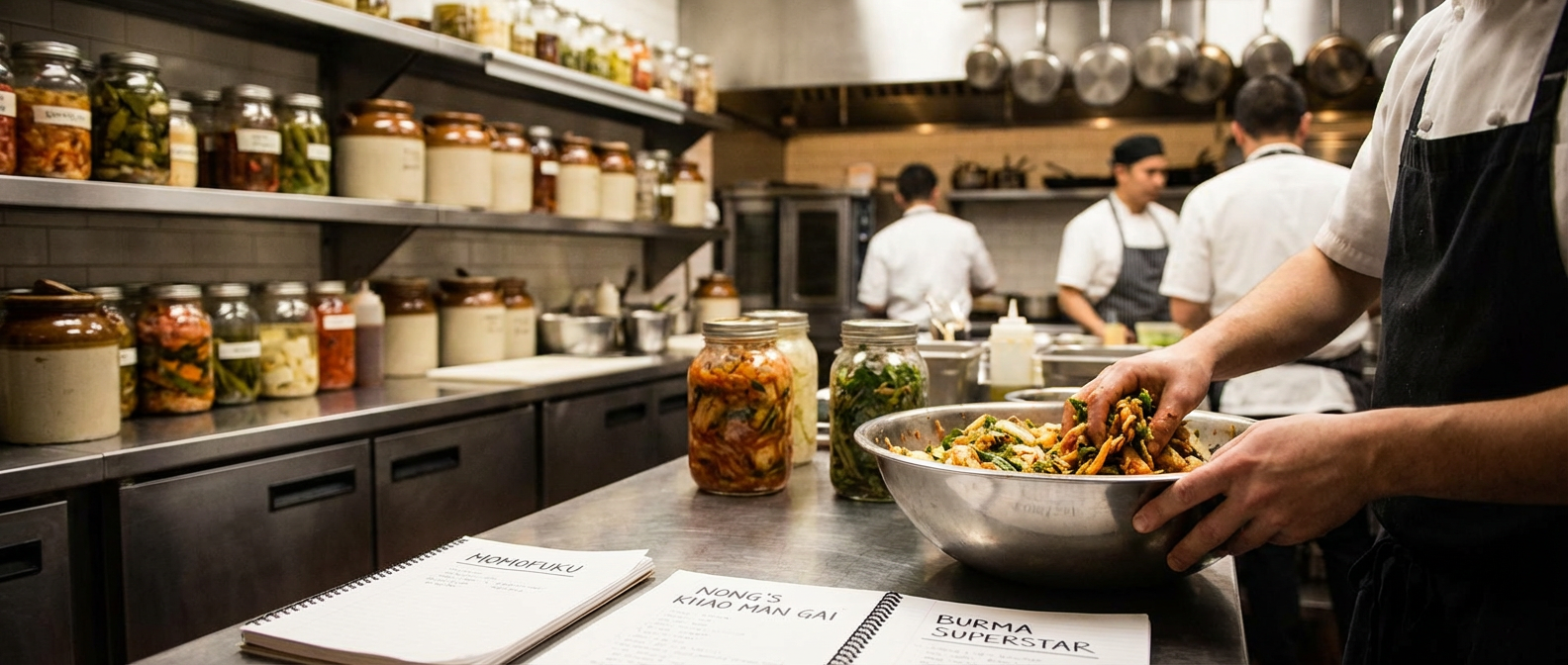
The shift reflects something deeper than trend chasing. These condiments are moving because they work. Fermented shrimp paste brings umami density, funky complexity, and a savory depth that took Western kitchens decades to understand through Japanese dashi and miso. Now chefs are discovering that Filipino patis fish sauce and Malaysian belacan offer different access points to the same fundamental principle: fermentation creates flavor you cannot achieve any other way. The adoption rate has been steep enough that specialty retailers are struggling to keep inventory current. Trade data from the Asian American Grocers Association shows a 44 percent increase in sales of imported Southeast Asian fermented condiments across U.S. specialty retail in 2025 alone. That is not organic curiosity. That is professional demand.
When Knowledge Travels Faster Than Credit
Here is where the conversation gets complicated. James Beard Award winner Margarita Forés presented a significant paper at the 2025 Madrid Fusión culinary congress positioning Filipino patis fish sauce as a direct flavor competitor to Japanese dashi in Western kitchen applications. The work was rigorous, technically grounded, and necessary. But it also highlighted a persistent gap in how Western culinary discourse has treated these techniques: we have borrowed liberally from Southeast Asian fermentation traditions while remaining vague about where those techniques originated.
The Culinary Institute of America’s reference text on fermentation, built largely around the principles established in Noma’s 2021 Fermentation Guide, cites Southeast Asian techniques in eight of its twelve foundational fermentation chapters. Those eight chapters represent the core skeleton of how fermentation works as a preservation and flavor-building tool. Yet for years, the conversation in American restaurant kitchens centered on Korean fermentation or Japanese miso production, as if Southeast Asian fermentation existed in a separate category altogether. It did not. It was always there, structurally important, and chronologically older than many of the Asian fermentation traditions that received more prominent attention.
The Curriculum Shift Signals Real Change
When the Culinary Institute of America launched a dedicated Southeast Asian Fermentation module within its ProChef Program in September 2025, it marked the first standalone regional fermentation curriculum addition since Korean fermentation was integrated in 2019. That sounds like academic minutiae until you understand what it means on the ground: students training at CIA will now learn bagoong production, fish sauce fermentation, and the regional variations across Thailand, Vietnam, Philippines, and Malaysia as a coherent system rather than scattered cultural artifacts. These students will graduate understanding not just how to use these ingredients, but where they come from and why they matter.
This distinction, between knowing how something works and understanding where it belongs, is critical. A chef can taste bagoong and recognize its salinity and funky undertones. But a chef who understands the history of bagoong production in the Philippines, the regional differences between versions, and the specific fermentation timelines involved is a chef who can cook with genuine knowledge rather than borrowed technique. That is the difference between appropriation and appreciation. That is the difference between a trend and a permanent shift in how Western kitchens understand fermentation.
What Good Attribution Actually Requires
The conversation in 2025 has rightly centered on whether Western chefs have adequately attributed the cultural origins of these techniques. Attribution is not just crediting a dish or an ingredient on a menu. Attribution means acknowledging that Southeast Asian fermentation traditions represent distinct culinary systems with their own logic, their own regional variations, and their own technical sophistication. It means not presenting Filipino techniques as variations on Japanese ones, or Malaysian shrimp pastes as exotic garnishes for French sauces.
Some restaurants are doing this work carefully. They source directly from producers in Southeast Asia. They feature fermented condiments not as supporting players but as primary elements. They teach their staff the histories and the contexts. They credit the cultures on their menus and in their interviews. Others have adopted these ingredients with the same blank enthusiasm they might bring to any trendy addition, and that distinction matters enormously. The difference between a chef who studies Filipino patis to understand its role in Filipino cooking and a chef who uses patis because it is profitable is the difference between genuine culinary engagement and extractive appropriation.
The Responsibility That Comes With Rising Sales
As these fermented condiments become increasingly visible in American restaurant kitchens and specialty retailers continue to report growth, the pressure on Western chefs to do this work responsibly will only increase. The accessibility of these ingredients is genuinely exciting. It means more American cooks will have the opportunity to understand fermentation in ways their predecessors could not. It means Southeast Asian fermentation techniques are moving from the margins toward the center of how Western culinary professionals think about flavor and preservation.
But accessibility without context becomes extraction. Rising sales without rising knowledge becomes appropriation. The most interesting restaurants working with these ingredients right now are the ones treating them as entry points into deeper study, not just useful flavor additions. They are asking questions: How does this ingredient function in its original context? What regional variations exist? Who are the producers, and how can I support them directly? Those questions lead toward genuine culinary progress rather than cycle-chasing.
The fermentation wave in American kitchens is real and, I believe, permanent. These ingredients work because they are built on centuries of technical knowledge. The question now is whether that knowledge will be honored as it travels, or absorbed and forgotten, credited back to whoever makes the fanciest dish rather than whoever developed the techniques that made the dish possible. That outcome depends entirely on what individual chefs choose to prioritize. Have you tasted the difference between fermented condiments sourced with intention versus those chosen purely for flavor? I would genuinely like to hear what you have noticed.